


 Mark Megahan

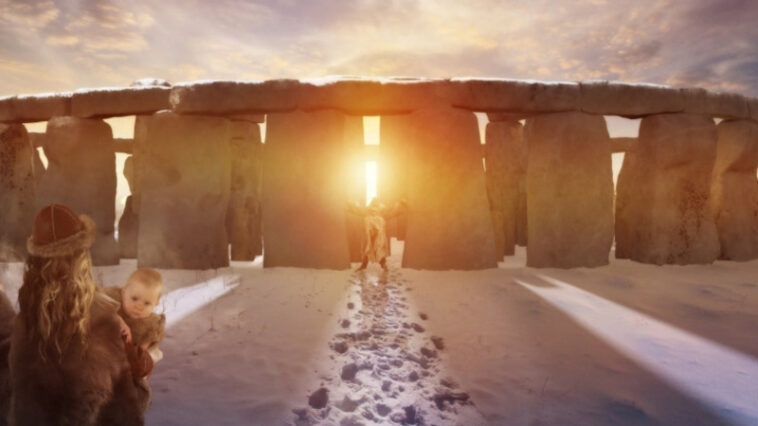
With the Winter Solstice upon us once again, there’s some fresh and interesting news about Stonehenge. The circular group of standing stones with stylishly linking capstones remains a complete mystery to modern scientists. Today, it’s just a little less mysterious thanks to a “major discovery” in August. No matter what the original purpose was, political expediency turned it into a stone age “tourist trap” that was a huge benefit to the economy of several nations.
Stonehenge attracts tourists
People have been flocking to Stonehenge from near and far since the first stones were assembled. After more than five millennia, the site’s popularity remains as strong as ever. Originally, it was only popular with those who built it.

After around 500 years of continuous use, a remodeling project turned the Salisbury Plain into a tourist trap which still packs them in today.
Stonehenge Researchers focusing on the Altar Stone made a controversial announcement in August declaring that the iconic monolith at the very heart of the arrangement was carried from northeastern Scotland.
They thought they had the exact spot nailed down, then admitted they didn’t. The question itself started more speculation. It turns out that the arrangement we recognize today is a “reconstruction.”
At first, Stonehenge only consisted of the central “bluestones.” The first construction on the site dates back to around 3000 BC and “occurred over several phases.” The smaller blocks of fine-grained sandstone came from 140 miles away at the Preseli Hills area in west Wales. The outer circle of large sarsen stones wasn’t added until around 2500 BC.
They came from “the West Woods near Marlborough, located about 15 miles away.” At around the same time, “an inner horseshoe made of trilithons, or paired upright stones connected by horizontal stone beams” was added. That’s also when the current alter stone appeared.
Important across Briton
According to lead study author Mike Parker Pearson, “It shows that this site on Sailsbury Plain was important to the people not just living nearby, but across Britain, so much so that they brought massive monoliths across sometimes hundreds of miles to this one location.”
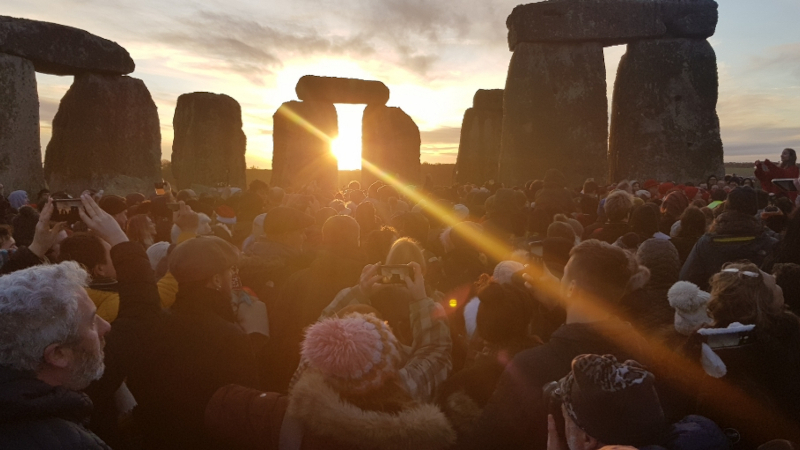
Stonehenge was great for the primitive economy. The Altar Stone, which “aligns with the sun during the winter and summer solstices” is “the largest of the bluestones used.” It’s massive, fragile and came from far, far away. For a reason.
“The fact that all of its stones originated from distant regions, making it unique among over 900 stone circles in Britain, suggests that the stone circle may have had a political as well as a religious purpose — as a monument of unification for the peoples of Britain, celebrating their eternal links with their ancestors and the cosmos.”
Stonehenge provided a common purpose for the unemployed masses. Transporting giant stones over long distances put a lot of people to work. “Hundreds, and possibly thousands, of people would have been needed to help move the stone over land, and the journey may have taken about eight months.”
Meanwhile, all along the route, the project attracted huge amounts of curiosity. “Travel by land would have provided much better opportunities for spectacle, pageantry, feasting and celebration that would have drawn people in (the) thousands to witness and take part in this extraordinary venture.”
The rebuilding of Stonehenge “would have taken significant coordination across Britain — people were literally pulling together — in a time before telephones and email to organize such an effort.“