


 Mark Megahan

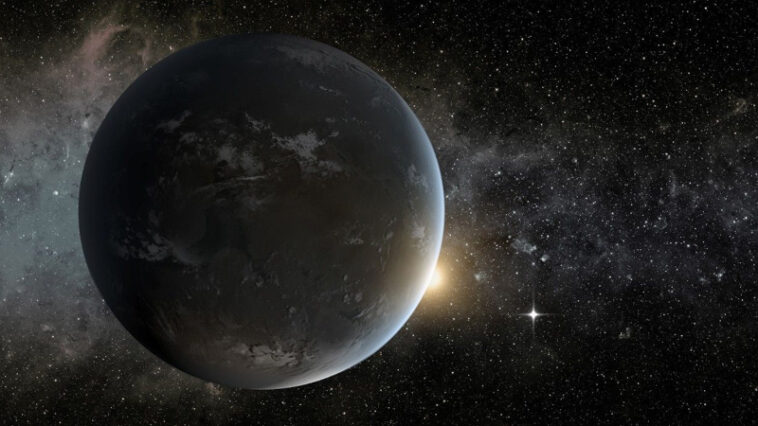
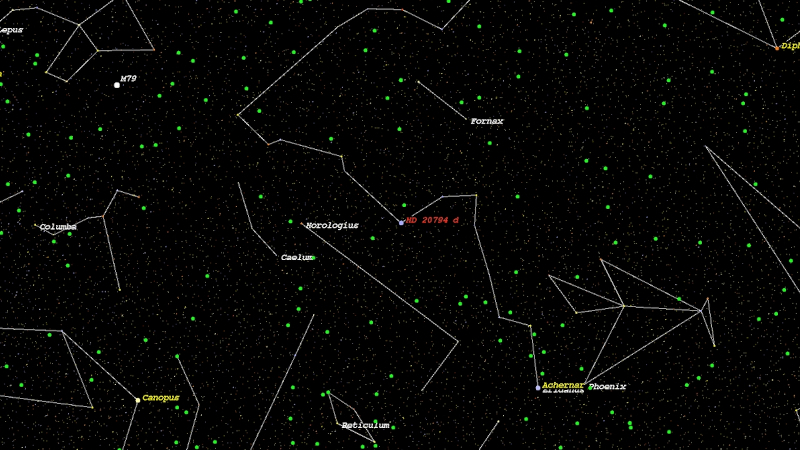
A planet the human race can live on that’s close enough to colonize. Science fiction is once again on the verge of reality. Dr. Michael Cretignier spotted HD 20794 d two years ago. A team of international researchers have new things to say about his exoplanet. They confirm it elliptically orbits within the nearby star’s “habitable zone.”
A promising planet
This isn’t the only planet astronomers have discovered orbiting an alien star. It’s the most promising, though. There are two really important things in its favor.

One is the fact that it orbits the parent star at a proper distance. The other is that it’s a mere 20 light years away.
Even if the James Webb Space Telescope confirms liquid water on the surface of the planet, there are still a few bugs to be worked out to get there. One is a proper propulsion system. Voyager 1 is the fastest probe the human race has sent out into space. It’s currently cruising along at a casual 38000 mph. It can reach HD 20794 d in about 353,000 years.
A message in a bottle tossed into the ocean at Plymouth, England before the pilgrims sailed might be washing up along the coast of North America any day now. The Voyager probes were nothing but messages in a bottle on a cosmic scale. Technology can improve things.
Sailing ships cut the travel time to America down to months. Jet planes hop the pond in hours. The ISS covers the distance in a few minutes.
Voyager clocks in at around 0.05 percent of light speed. We can get close to 0.1 percent now. Once we manage more like 50 percent, we can think about moving there. Provided the planet is friendly in a few other ways.
Essential liquid water
Astronomers are still playing with the high tech toys it takes to discover planets in remote parts of the universe. We haven’t been able to see anything smaller than a star before. The Webb Telescope has extra gadgets useful for analyzing the atmosphere of any planet we can spot.
You can expect Oxford University to be booking some observation time on it soon. Their team led by Dr. Michael Cretignier is really interested in a detailed analysis of his discovery.
Colleagues published an article in Astronomy & Astrophysics recently with “new findings expanding on his planetary discovery.” Planet HD 20794 d, “orbits a ‘habitable zone‘ of a nearby star akin to our sun, which the exoplanet orbits elliptically.”
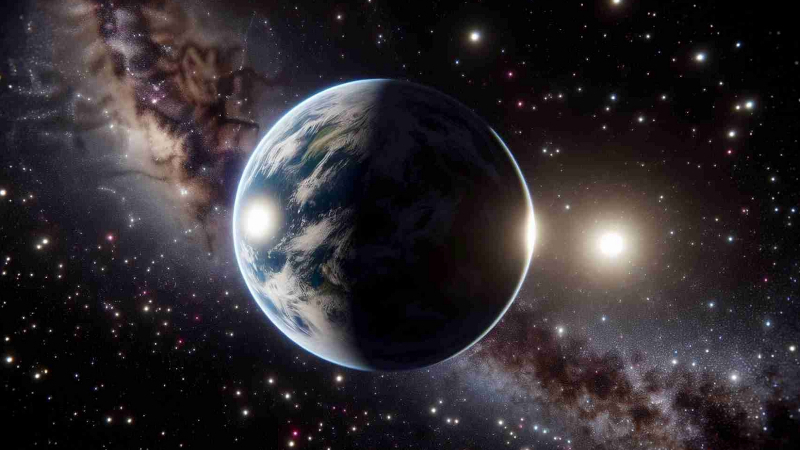
What that means in practical terms is “that the exoplanet is close enough to its star to maintain liquid water on its surface, which is essential for sustaining life.”
It could also be covered in poisonous gasses. “Scientists say more research is required to determine if the planet can host life.” Colonists should be strong ones. It’s a huge world, with “a whopping six times greater mass than Earth.” That’s what led to it’s detection.
“Dr. Cretignier was able to detect the planet by noticing periodic shifts in the spectrum of light emitted by the host star.” His team “believed this could have occurred because of the gravitational pull of a nearby planet.” They were right.