As an Amazon Associate, we earn from qualifying purchases.
Hunters invested a great deal of time concentrated on deer signs. Primarily, we concentrate on the common signposts that a buck was near, scrapes, rubs, licking branches, etc.
While many hunters keep in mind deer tracks, they don’t frequently stop to believe much about the wild animals that made them. They do not consider where the deer was going, how quick it moved, or what animal made the hoof prints.
Could it have been a doe with two fawns? Perhaps it was a displaced button buck. Or was it the dollar of your dreams?
There’s a bit more to deer prints than you may realize, and once you discover how to analyze tracks a little better, a broader and more precise picture of deer behavior and motions starts to reveal itself.
This is everything you can find out about the tracks you see on the deer routes in your searching location.
Identifying Deer Tracks
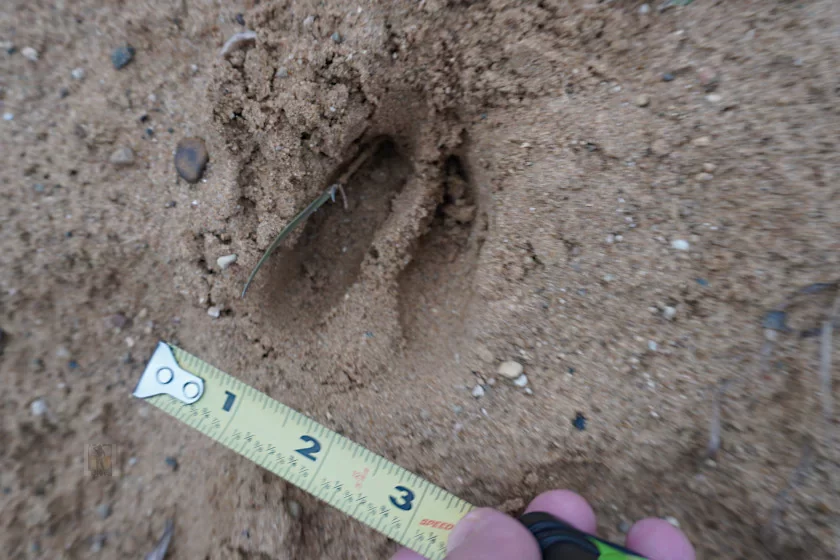
Photo by Travis Smola
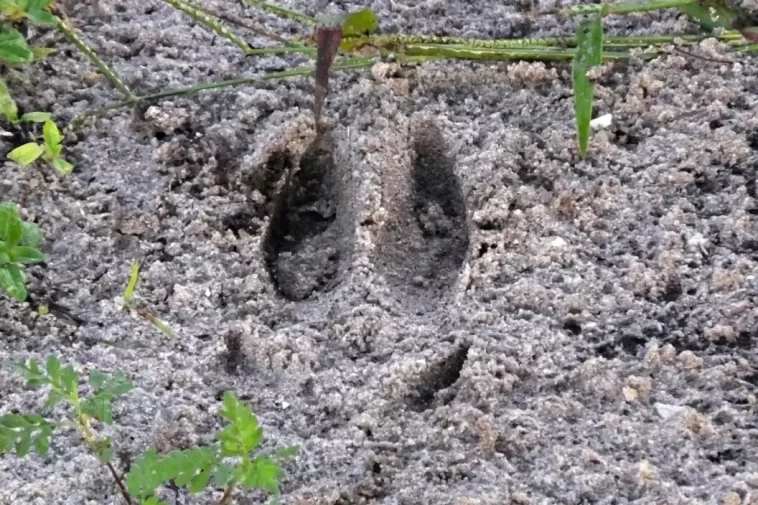
All you truly require to know is that deer are cloven hoof animals, and they leave an unique, approximately heart-shaped, split-toed footprint that you don’t need to be a tracker to identify.
Of course, lots of cloven hoof animals live here in The United States and Canada, so it becomes more difficult to identify the specific types in locations where mule deer and other ungulates live.
There is some discord amongst hunters on how they determine tracks. Some just determine the two cloven hooves. Others include the dew claws, which are vestigial and are not always visible.
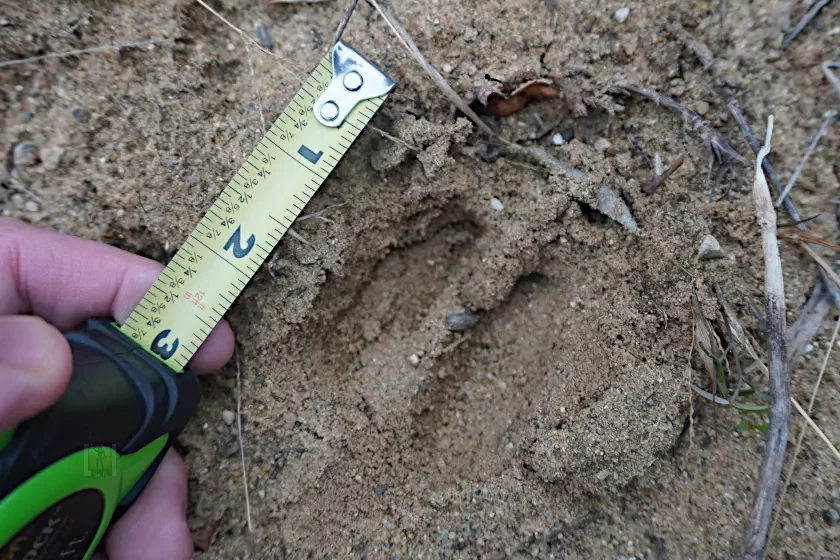
Usually, an adult white-tailed deer track, determining just the two main parts of the hoof, will determine 2-3 inches long and perhaps 2-2.5 inches across. Some bigger bucks may have feet that are 3 inches across.
Photo by Travis Smola
The appearance of the tracks may vary depending on the deer’s health and weight. In some cases deer experience uncontrolled growth of their hooves due to a condition called “sleigh hoof,” which essentially triggers the Keratin in their hooves to grow frantically and cause extreme pain.
Thankfully, the condition is uncommon. However, it’s most likely a good bet that a deer with more pointed tracks is younger than one with prints where the toes are rounded. That brings us to another frequently asked question.
Difference Between Buck & Doe Tracks
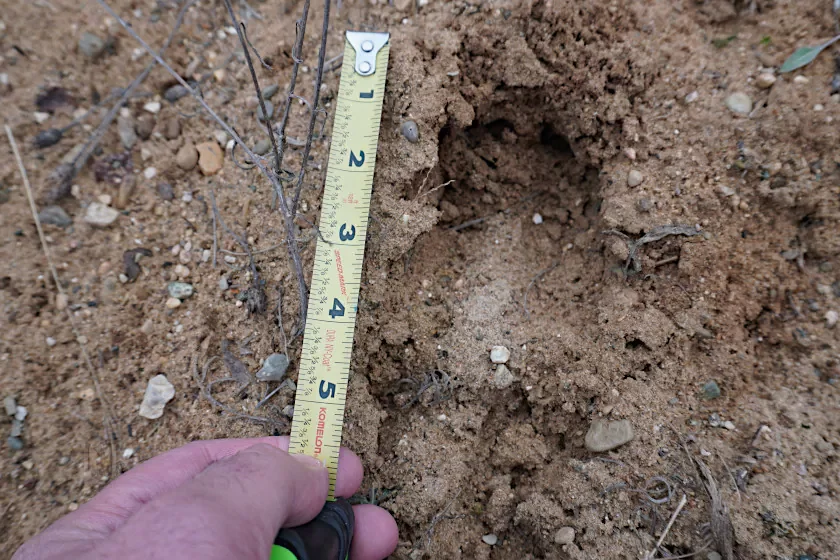
Photo by Travis Smola
Now, I’ve heard a great deal of differing opinions and theories on how to examine the deer tracks we find in the forest for many years.
Not unless you see the deer make them. I do not claim to be an expert tracker. I state this since I’ve experienced exceptions to practically every “rule” I have actually ever been told on the subject.
People have told me for years that buck’s drag their toes in the snow and that all snow tracks with drag marks are buck’s. It sounds great in theory.
I dislike to rupture their bubble, however throughout the hunting seasons every year, a number of older and really big does have been spotted dragging their toes in six to eight inches of snow in a food plot.
That said, I believe it’s possible to guess which kind of deer left a track. If the track is 3-3.5 inches or more (excluding dew claws) and is especially deep, there’s probably a good chance you’re dealing with a buck.
Remember that fresh tracks are least likely to be distorted and will show sharp detail and features.
The older tracks tend to get distorted, especially in the snow.



 admin
admin