



 admin
admin

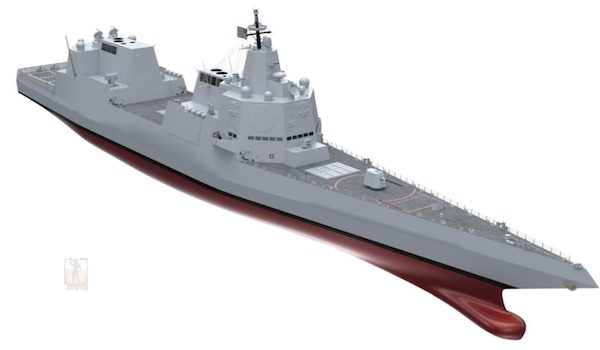
It has been almost 20 years since the United States Navy decided to design a new class of warship. And this one is going to be rigged up with the newest in hypersonic missile and high energy laser weaponry. The new concept is dubbed the DDG(X) and is slated to begin construction in 2028. It’s a 21st century warship that is definitely a new toy our Navy will love playing with.
Born in the 80’s

DDG(X) is based off the longest running and most successful design in Naval history, the DDG 51. This guided missile destroyer is commonly known as the Arleigh-Burke Class of Destroyers. First commissioned in 1985, the class has undergone 3 different generations of upgrades, or flights. The FLT III or Flight 3 of the Arleigh-Burke is going to be the new testbed for what will eventually be the DDG(X).

Concept Only
We still have yet to see what the hull will look like on this “Large Surface Combatant,” but we do know some of the capabilities. It is initially slated to have up to 34 cells of VLS for firing guided missiles. This block of standard cruise missiles can be swapped out for a 12 cell block for firing larger, hypersonic cruise missiles. Ship borne, mach 7or so, flying devastation the likes of which you will never see or hear coming. If these weapons are targeting the area around you, shit just starts blowing up. Eventually, they will be upgraded for 96 cells of VLS, or at least 24 or more cells of ship borne hypersonic missiles.

Bells and Whistles That Go Boom
To add a “bell” to the hypersonic missiles “whistle,” the DDG(X) will feature high energy laser systems. 150 kilowatt to 600 kilowatt power ranges to be more precise. This is a great leap in capability for the warships of the future. These laser weapons will allow for the quick neutralization of incoming aircraft and guided missiles. Unfortunately, at current capabilities, we do not have a solution for disabling a hypersonic threat. What about the 600 kilowatt lasers you say?
Against The Clock
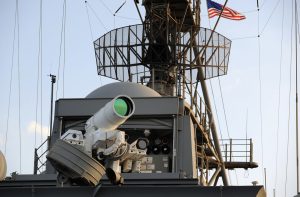
Well, it’s a problem of time really, with both known hypersonic threat scenarios. Let’s start with the ship borne threat, that will hug the surface of the ocean, at mach 7 let’s say. That’s 7 times the speed of sound. The time it takes for the anti missile laser to burn through the missile to cut the engine off the warhead is too great. More than the time it takes for the 5,000 mph death machine to travel the 16 miles from the edge of the horizon to the starboard side of the ship. The quick math says that’s about 11 seconds.
So you have to detect, power up, lock on, engage and destroy, in about 11 seconds, give or take a half second for atmospheric conditions. That and tracking an object precisely that is moving that fast is very difficult, especially with laser precision. And that’s just mach 7. At mach 10, you have even less time.
Necesito Line of Sight
This also highlights the disadvantages of a directed energy weapon, range. You can not shoot at something until it creeps over the horizon, within direct line of sight of your weapons system. The AN/SPY-6 sensor system with the larger 18 foot sensor will aid in detection of over the horizon threats, when that’s upgraded. That, and all of our defense satellites and intra-ship-fleet networks. But you still can’t stop the hardline of the time on target the laser will have before it hits you. Unless you get a bigger laser, but that takes more power.
The Big Hypersonic Missiles
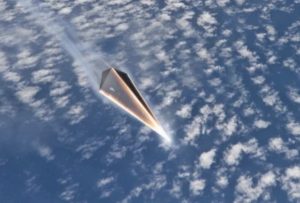
The other threat window for hypersonic weapons now includes low earth orbit. These larger hypersonic weapons are extremely fast, and travel at an altitude of 150km above. Like the Hypersonic Glide Vehicle that China deployed last year. Isn’t that special? This one was reported to reach speeds above 20,000 mph at time of impact on target. That’s the benefit of rocketing towards your target from low earth orbit, orbital velocities baby! And the quick math there says that is about 15 seconds from overhead at 150km till impact. Give or take a second due to atmospherics and such. Being larger, you’d need more time to literally burn it down, or again get a bigger laser. But 600 Kilowatts is as much as we can do at the moment, that we know about.
IPS
To power these lasers and the other high tech sensors and weaponry on the DDG(X), the Navy is utilizing an IPS. This is an Integrated Power System that produces about 75 megawatts of power, or enough for about 12,500 homes. Initially it will be similar to the 4 GE LM 2500 Gas Turbine Engines that provide a total of 134,400 Horse Power to the Current FLT III Arleigh-Burke’s. Not bad for a ship borne power source. But will it be enough? It is already apparent that the 600 Kw lasers are limited, and potentially insufficient, for the modern threat of the hypersonic missile. So why would the Navy be so excited about this vessel? There must be something we don’t know.
DDG(X), Hiding in Plane Sight
I would hope our Navy is smarter than showing the world what our new destroyers capabilities will be, in their entirety. I’m sure there is plenty of high tech, off the record, classified weapons and defense systems we will never hear about any time soon on the DDG(X). What would you guess is the next high tech gizmo or gadget that the new Destroyer of the 21st century will provide? A shielding system? How about a rail gun? What about an active camouflage system? Who knows y’all. If hypersonic missiles and lasers are what they are telling us, the sky is the limit for what the brainiacs over at the Naval Surface Warfare Center have planned for our next generation Large Surface Combatant, the DDG(X).


